Thursday, 24 September 2026
Open Access in the European Research Area: progress remains uneven as new report calls for more concerted action
A new independent expert report published today by the European Commission highlights that, despite notable advancement, the implementation of open access across the European Research Area remains uneven and fragmented. While progress has been made, persistent barriers continue to hinder widespread open access, and further action is needed.
Over the past decade, European Union soft-law measures, national strategies, funder mandates, and, where applicable, national legislation have advanced open access. However, these efforts have not yet produced a coherent framework across the European Research Area, leaving researchers, institutions, and funders to navigate differing policies.
The report provides a snapshot of the current open access landscape, offering policy recommendations to improve access to scientific publications and research data. It draws on an analysis of all 27 EU Member States and eight non-EU countries.
Full Story and links to the Report here


Business Systematic Reviews Blog
The Business Systematic Review Group originated out of a lighting talk at the Business Librarians Association Conference in June 2022. Becky Collins (Academic Librarian, Coventry University) talked about her experience of moving from an advisor to researcher; conducting a business systematic review as a librarian. The talk ignited a wish from across the Business Librarian community for more support in this area. The Business Systematic Review Working Group was born and held the first online meeting in September 2022.
What You Can Expect from Our Blog:
Our blog is designed to be your go-to resource for all things related to systematic literature reviews in the business domain.
Expert Interviews and Insights: Conversations with leading experts in the field, offering their perspectives on emerging trends, common challenges, and innovative solutions.
Step-by-Step Guides: Detailed tutorials on every phase of the SLR process, from formulating research questions to selecting databases, conducting searches, and synthesizing findings.
Best Practices and Tips: Proven strategies to enhance the efficiency and effectiveness of your SLRs, including tips on managing large volumes of data, ensuring reproducibility, and maintaining rigor.
Tools and Resources: Reviews and recommendations of the latest tools, software, and databases that can streamline the SLR process and improve the quality of your reviews.
Case Studies and Examples: Real-world examples and case studies showcasing successful SLRs in various areas of business research, providing practical insights and inspiration.
The visibility problem in academic policy engagement
Policy engagement opportunities are fragmented and unevenly visible, which can lead to unequal access. Considering research by Overton to structure the existing data on policy engagement opportunities, Céire Wincott shows how this can systematically reveal existing inequalities, but also create new avenues for connecting research to policy.
Why research analytics built on AI needs to show its working
Merely appearing useful – versus being reliable, credible or provable – are different things, writes Kate Byrne
In the past two years, the research analytics market has – like most markets at the moment – flooded with AI.
Every significant platform now claims it. The language is familiar: AI-powered, AI-driven, AI-enhanced. Most of them return something that at least looks useful, fast. We are quickly learning, however, that merely appearing useful versus being reliable, credible or provable – when the stakes really matter – are different things.
Tuesday, 17 September 2024
PhD Projects, Programmes & Scholarships in Ireland
This guide will help you find the right PhD and explain what doing a PhD is actually like. They provide a wide range of advice on postgraduate research and funding.
Government of Ireland Postgraduate Scholarship Programme
The Government of Ireland Postgraduate Scholarship Programme is an established national initiative, funded by the Department of Further and Higher Education, Research, Innovation and Science, and managed by the Council. A new national research agency, Taighde Éireann/Research Ireland, has been established by the government. The agency will amalgamate the work of the Irish Research Council and Science Foundation Ireland. The full operation of Taighde Éireann will be enabled over the coming period.
How and why do the life sciences cite social sciences?
Which is more challenging: developing a vaccine for an unforeseen pandemic in under a year, or convincing people to take it?
A lesson from COVID-19 is that both the development and adoption of science can be equally challenging. From research to solution, societal factors lie in the last mile, capable of either facilitating or hindering the problem-solving power of science. Scholarly understanding of society, the realm of the social sciences, can complement life sciences by re-embedding biological entities into societal structures and navigating public acceptance of innovations.
Monday, 17 July 2023
World University Rankings 2023
The Times Higher Education World University Rankings 2023 include 1,799 universities across 104 countries and regions, making them the largest and most diverse university rankings to date.
The table is based on 13 carefully calibrated performance indicators that measure an institution’s performance across four areas: teaching, research, knowledge transfer and international outlook.
Tuesday, 6 September 2022
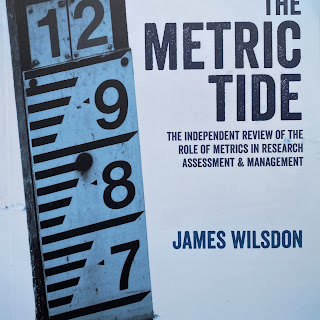
The Metric Tide Revisited
As part of FRAP (The Future Research Assessment Programme), an expert panel has been invited to lead a review of the role of metrics in research management and assessment.
This review, The Metric Tide Revisited, will take a short, sharp, evidence-informed look at current and potential uses of metrics against a set of tightly-defined objectives to:
Revisit the conclusions and recommendations of the last detailed review of these questions, The Metric Tide (2015), and assess progress against these.
Consider whether developments over recent years in the infrastructures, methodologies and uses of research metrics negate or change any of those 2015 conclusions or suggest additional priorities.
and look afresh at the role of metrics in any future research excellence framework and consider whether design changes now under consideration as part of the FRAP suggest similar or different conclusions to those reached in 2015.
The review was conducted over the Summer, and will be completed mid-September so we await with interest the published outcome.

What lies ahead for research assessment reforms in Europe?
In June 2022, the Council of the European Union gave the green light for a European Agreement on research assessment reforms to go ahead. Plans for this initiative were proposed in a European Commission scoping report in 2021. Under the Agreement, research actors across European member states (including research performing organizations, funders, and national or regional assessment organizations) will be invited to sign up voluntarily and pledge their commitment to translate principles outlined in the report into local assessment reforms. Read the full post here.
Subscribe to:
Posts (Atom)